WHY SUPPORTING LOCAL SEED PRODUCERS MATTERS
Embracing crop diversity in your vegetable garden

What a sense of anticipation it is indeed when a package of recently ordered seeds lands on the doormat. Those hours of dreaming and imaging, perusing seed catalogues, can now be made real: pictures of perfection to be translated into harvests from one’s own garden. Yet, how many of us know where the seeds in those inviting little packets come from? Where were they grown? What is their provenance? How will they get along in my garden when the land from which they came almost certainly has a very different climate and soil? The choices we make from who we buy seeds can have a profound impact on their likelihood of flourishing in our own gardens.
Seed production for crops grown on farms has consolidated over the last half century: just four global giant agri-businesses produce more than 60% of all the seeds of the top three carbohydrates we all rely on to live: maize, wheat and rice. Companies selling seeds to gardeners are few in number too, with many local companies having gone out of business thanks to brutal competition as well as the result of consolidation through mergers and acquisitions. Just one company, BVG Group, owns three of the largest names. BVG is a ‘multichannel retailer’ selling through catalogues, online and various media outlets. It bought a venerable seed company Thompson and Morgan in 2017 and in 2020 acquired Suttons who also owned Dobies, a company I had some connection with when I was a Trustee at Garden Organic. At that time the charity was in a joint venture with a small seed seller, Chase Organics, who owned The Organic Gardening Catalogue which did what it said in the name - sold organic seeds and supplies to amateur gardeners. Dobies acquired Chase Organics and continued the JV with Garden Organic until recently. Today T&M, Suttons and Dobies dominate the amateur gardening market and the Organic Gardening Catalogue is a mirror of Dobies own brand. I have yet to find figures for the percentage of market share that these three companies have, but it is substantial. Both Suttons and Dobies started life as seed producers breeding and growing crops for seed from their land in the UK. But with this consolidation in the industry gardeners are left with less choice of what to sow. Catalogues contain an increasing number of genetically narrow, modern F1 hybrid cultivars which have been bred almost exclusively for commercial production. Although some favourite, traditional, open pollinated cultivars are sold by the largest seed sellers, to say the amateur gardener is badly served is an understatement.
There are still some traditional seed companies selling seeds in the UK but who owns them? Mr. Fothergill’s, a brand one sees in many garden centres and which also has considerable online business is now privately owned by an investment company affiliated with another capital management company. Unwins, a much loved seed producer and seller was bought by another horticultural company, Westlands, over 20 years ago. There are still some well respected and long established mail-order seed companies such as King Seeds which was founded over 135 years ago and is still run by the King family and Marshalls from whom I used to buy seeds. Now a proliferation of branded ranges associated with celebrity gardeners or organisations like the RHS are muscling in on the act. As to the provenance of any of their seeds I have no idea. They have almost certainly all been bought from growers in China, Thailand, North Africa, Spain or the USA. Only a tiny percentage of the seeds we buy from these companies have been grown in the UK. But there are exciting alternatives for growers who want to build diversity and resilience into what they sow with a steady increase in small, local growers and breeders. Like the giant seed sellers many of this new generation of sellers must import seeds. This is particularly the case for organic seed which is in very short supply. Since Brexit, the costs associated with importing have increased hugely and many European growers don’t see the UK as a worthwhile market when they can sell everything they produce within the EU.
But in the last 30 years a new generation of seed companies like one of the pioneers, Real Seeds, based in west Wales www.realseeds.co.uk and Tamar Organics www.tamarorganics.co.uk in Devon offer an important alternative. Real Seeds grow much of the seeds in their diverse catalogue themselves and also contract small scale growers in the UK so that they only need to buy in about 40% of the seeds they sell principally from the EU and the US. As their business grows, so does the amount of seeds they grow. Tamar Organics has been selling seeds since 1994 and are now growing more of their own, locally adapted varieties. Another Devon business I am a huge fan of include is Vital Seeds www.vitalseeds.co.uk who are focused on growing and selling organic seeds. The only independent Scottish seed producer, maintaining and improving locally adapted varieties that thrive in the Scottish climate is Seed of Scotland www.seedofscotland.com and in Wales there is a growing group of growers and breeders who are part of a remarkable seed co-operative The Wales Seed Hub www.seedhub.wales.
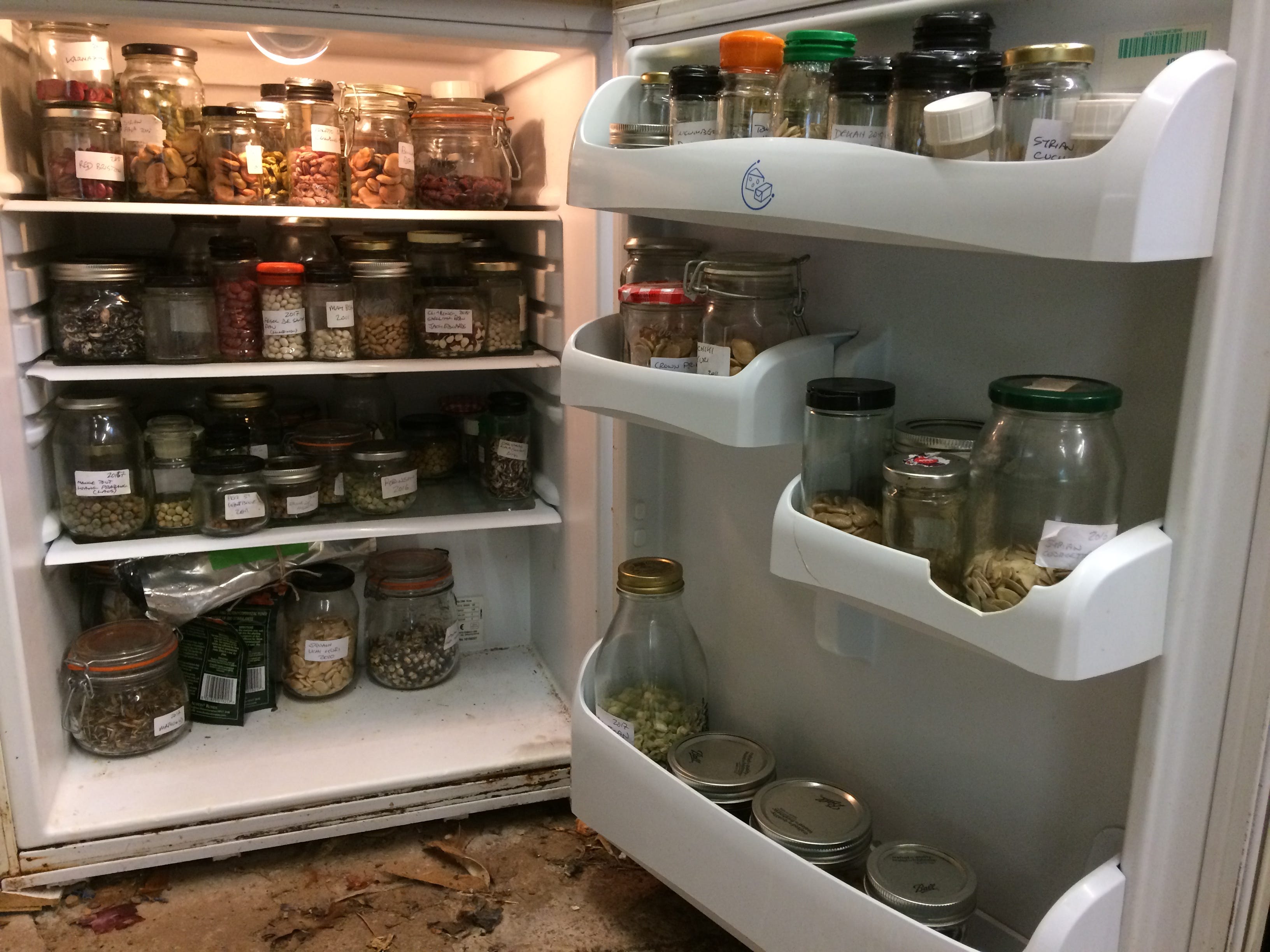
As someone who has been saving and maintaining hundreds of vegetable varieties since the late 1980’s I am immensely proud to have been able to share some of my finds with several of this new generation of small-scale producers. I would urge anyone who wants to build diversity, deliciousness and resilience into their vegetable garden to buy your seeds from these companies, many of which are start-ups and have only been in operation for a few years. By supporting them, saving seeds ourselves and sharing our growing stories we become part of the solution to building a more secure and sustainable future for food production wherever we are. And, if like me, from time to time you want to try modern hybrid cultivars you can get organic seed from Tamar Organics too. So, all bases covered!